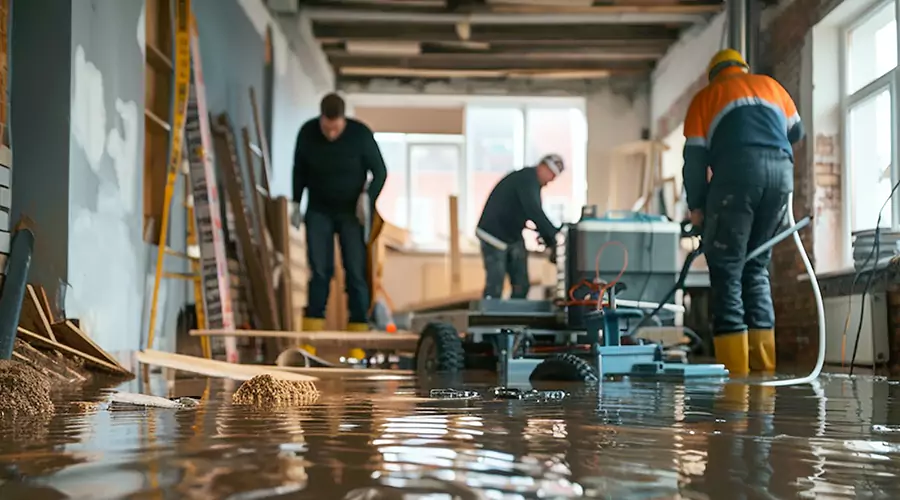




Water damage in a business setting — whether from a burst pipe, storm flooding, sprinkler malfunction, or leak — can be far more costly and disruptive than it may seem at first glance. Unlike residential losses, commercial properties often house large inventories, expensive equipment, critical records, and key infrastructure that must be protected before disaster strikes. More importantly, the financial and reputational cost of business downtime can exceed the cost of physical repairs. A proactive readiness plan helps protect assets and ensure your operations can continue or resume quickly.
Commercial water damage spreads fast and affects multiple systems — walls, floors, electrical systems, inventory, and inventory handling systems — making rapid response crucial to minimize secondary damage such as mold growth or structural failure. The first 24–48 hours after an incident are the most critical; action during this window significantly reduces long‑term losses and speeds recovery.
Every business should start by creating a formal water damage readiness and response plan. This plan becomes the blueprint for your team — defining roles, responsibilities, and procedures well before any incident occurs. It should include:
Plans that are written down and trained on perform much better in real emergencies, ensuring staff know what to do without hesitation.
Inventory and equipment are often the most financially significant assets in a commercial space. To reduce damage risk:
These simple spatial adjustments can mean the difference between salvage and total loss in the event of a leak or flood.
Technology not only detects problems, it prevents many of them before they escalate:
Smart leak detectors installed near water‑sensitive areas (plumbing, HVAC units, restrooms, equipment rooms) can alert property managers instantly when water is detected — often before staff or customers notice.
When combined with sensors, automatic shut‑off systems can stop water flow instantly, preventing ongoing damage after a major leak or pipe failure.
These systems are more than convenience — they significantly reduce the scope of damage and recovery time, protecting both equipment and inventory.
Many commercial water damage events come from cryptic sources — aging plumbing, clogged drains, faulty sprinkler heads, or corroded pipes. Regular inspection and maintenance help catch these before they become emergencies:
Routine checks show small issues early, lowering the risk of catastrophic leaks that disrupt business operations.
A plan on paper is only effective if employees know how to execute it:
Clear communication and training make your team part of the readiness strategy, reducing response times and preventing unnecessary damage.
Commercial enterprises rely on data and digital records as much as physical inventory. In many cases, these records are essential to continuing operations post‑incident. To safeguard data:
Data loss can be as crippling as inventory loss — and data backup is one of the most cost‑effective risk mitigation strategies.
Despite your best preparations, some damage events may still disrupt operations. A comprehensive business continuity plan helps minimize downtime and financial loss:
The goal is to resume operations as soon as possible, not just repair the damage.
Waiting until water damage strikes before looking for help often leads to delays, poor vendor choice, and extended downtime. Establish relationships with qualified restoration and cleanup professionals in advance so they can respond immediately when needed.
A vetted partner means faster response times, proper equipment usage, and greater confidence in minimizing damage and returning to pre‑loss conditions quickly.
Commercial water damage readiness isn’t just about avoidance — it’s about protecting inventory, safeguarding equipment, and ensuring your business stays open or returns to service fast. By planning ahead, investing in detection systems, training staff, maintaining equipment, and backing up critical data, you reduce the risk of costly losses and lengthy downtime when incidents occur. A comprehensive, practiced readiness strategy gives your business the resilience it needs to survive water damage events and thrive long after them.
Our certified experts are ready 24/7 to assist you with emergency restoration services.
GET A QUOTE